KEYNOTE — Hip Hop 50 in Hindsight: On the Miseducation of Hot Girls and Hidden Architects
Day and time: Saturday (March 21) · 14:30–15:45
Location: Coop Himmelb(l)au
Format: Keynote
Hip Hop 50 in Hindsight: On the Miseducation of Hot Girls and Hidden Architects
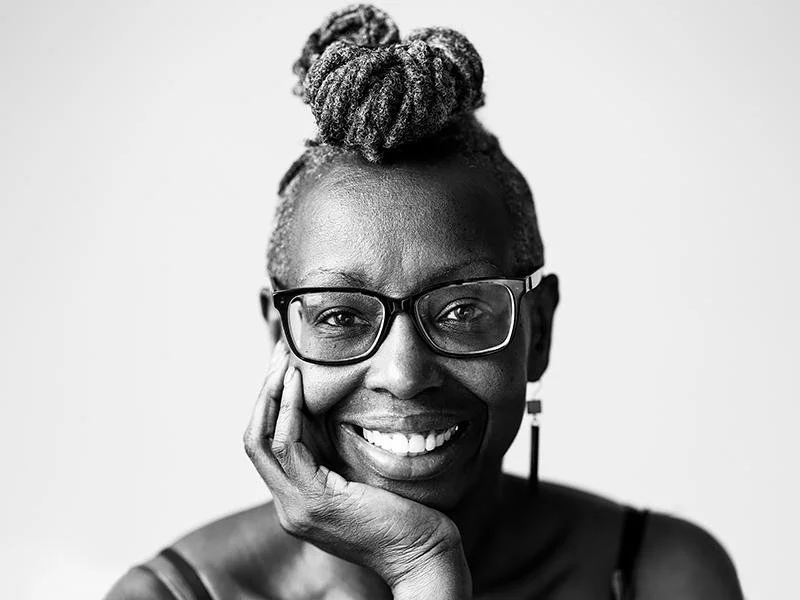
Presented by: Kyra Gaunt
How do we celebrate women’s visibility in hip-hop after 50 years without mistaking that visibility for power? How do we avoid reproducing the governing paradigms that girls and women believe we are dismantling?
Revisiting HH50 through case studies from my forthcoming book PLAYED: How Music on YouTube Orchestrates Violence Against Black Girls Online, this keynote re-narrates hip-hop beyond its patriarchal canon and male-dominated production culture. From Sha-Rock and Roxanne Shanté to Sylvia Robinson, Tricia Rose, and contemporary artists such as Megan Thee Stallion and Doechii, I trace a lineage of hot girls and hidden architects whose labor built hip-hop while their authority and voice remained epistemically silenced or erased.
My recent research centers on tween and teen Black girls’ bedroom twerking videos on YouTube as intimate musical play—creative and virally generative, yet unpaid as they monetize other people’s intellectual property (OPP—yeah, you know); rendered vulnerable through the sexualized surveillance of algorithms and audiences.
What if a Black girl movement produced their own twerk songs—remixed the sexist beats and rhymes, and directed non-sexist fan videos— treating themselves not as background decoration but as a social and embodied sonic force? As platform capitalism amplifies musical misogynoir and patriarchal ventriloquism, performative empowerment often masks enticement and exploitation in heterosexist rap.
While Tarana Burke’s #MeToo movement reshaped other entertainment industries, the recording business of hip-hop has largely experienced what I call an impunity gap—where sexual allegations against powerful men generate momentary outrage but little sustained structural reform in racialized gender politics.
Yet the fourth principle of the Universal Zulu Nation reminds us that hip-hop is an interdependent collective consciousness accountable to children, women, and men, across the gender spectrum in our communities. It calls us to protect the dignity of all people, including elders and ancestors.
After more than fifty years, if hip-hop cultures cannot move toward gender-equal justice, empowerment as entertainment for girls and women will continue to silence rather than protect.
In a platform era where archives train algorithms and recommendation systems learn from our past, nostalgia does not simply preserve patriarchy—it scales and amplifies its misogynoir, embedding bias into training data, encoding it in software systems, and reproducing it through the generative logics of AI. The question, then, is whether the stories Black girls’ bodies have long told to survive and dream of freedom will reshape hip-hop’s future—or be absorbed and automated without them. PLAYED, under contract with SUNY Press, is expected in Spring 2027 and is supported by a grant from the Ms. Foundation for Women.